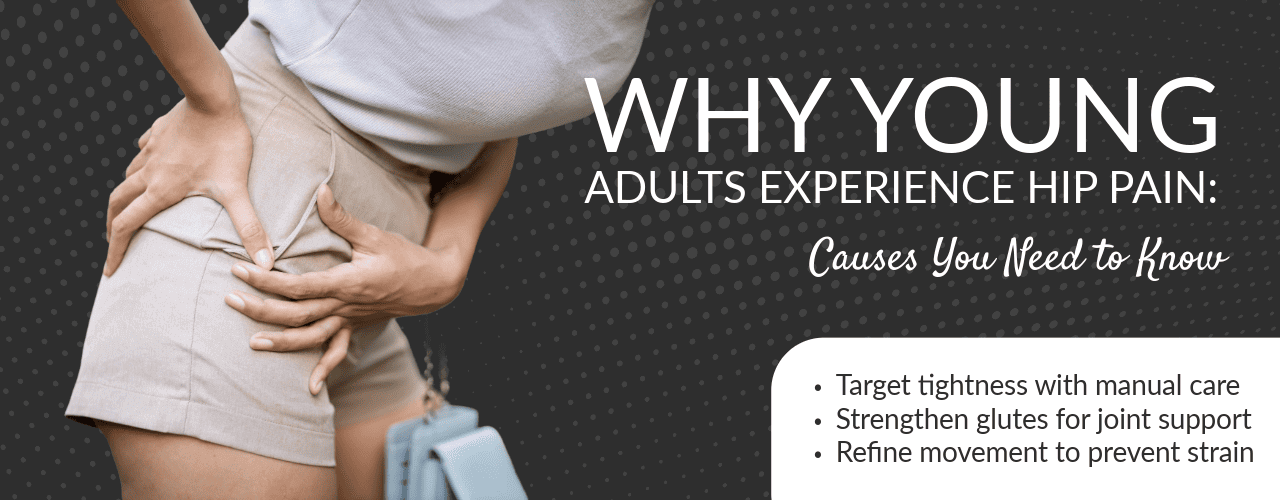
Hip pain is a common complaint among older adults, but did you know younger people can experience it, too? In fact, hip pain in young adults is more common than many realize. And just as the team at Atlanta Human Performance Center helps older people manage their hip pain, we can help younger adults, too!
Understand the Common Causes of Hip Pain in Young Adults
Identifying the cause is the first step to effective treatment. While this is true for everyone, it’s especially true for young adults, who can develop hip pain for a number of reasons related to activity levels, lifestyle, or injury. Here are some of the causes we frequently see at our clinic:
Overuse Injuries From Repetitive Activities
Athletes and other physically active people are particularly susceptible to overuse injuries–that is, injuries that develop gradually over time. They usually occur when the hip joint or surrounding muscles are stressed repeatedly without enough rest. Some examples include:
- Hip flexor strain, which is caused by repeated bending or lifting motions
- Iliotibial (IT) band syndrome, which refers to tightness in the IT band along the outside of the hip
- Tendonitis, which refers to inflammation of the hip tendons due to repetitive motion
Hip Impingement
This condition occurs when there’s abnormal contact between the ball and socket of the hip joint. It often starts in young adulthood and can lead to pain during sitting, squatting, or turning. Watch out for these symptoms:
- Sharp pain in the front of the hip or groin
- Clicking or locking sensation in the hip
- Reduced range of motion
Labral Tears
The labrum is a ring of cartilage that cushions the hip joint. Active young adults are at risk of tearing this cartilage, especially during sports or sudden twisting movements. Signs include:
- Deep ache in the hip or groin
- Pain during pivoting or turning
- Feeling like your hip is catching or locking
Hip Dysplasia
Some young adults are born with a hip socket that doesn’t fully cover the ball of the femur. This structural issue, known as hip dysplasia, can cause instability and pain as activity levels increase with age.
Bursitis
Inflammation of the bursae, the small, fluid-filled sacs that cushion your joints, can lead to sharp hip pain, especially during walking or climbing stairs. Though it’s more common in older adults, it can also affect younger individuals after injury or overuse.
How Physical Therapy Can Relieve Hip Pain and Improve Mobility
Targeted treatment offers lasting relief for hip pain in young adults. Depending on the cause of your pain, as well as your activity level and overall recovery goals, we’ll create a customized program to help you find relief. Here’s what you can expect:
A Comprehensive Assessment
We’ll begin with a detailed evaluation to identify what’s contributing to your hip pain. This includes:
- Analyzing your movement patterns
- Assessing muscle strength and hip mobility
- Reviewing your activity history
Manual Therapy and Mobility Work
Hands-on techniques, including soft tissue massage, joint mobilization, and targeted stretches, help release tight tissues and improve mobility.
Strengthening and Mobility Exercises
A customized exercise program improves hip stability and reduces strain on surrounding muscles and joints. It can help enhance joint alignment and build strength in the muscles that support your hips, such as your glutes and core. Both of these alleviate pressure on the hip joint.
Movement Education and Injury Prevention
You’ll also learn how to move more safely and efficiently in your daily life, whether you’re training for a sport or just walking around campus.
Take the First Step Toward Managing Your Hip Pain
Hip pain in young adults can be frustrating, but it shouldn’t hold you back from the activities you love. With early intervention and a tailored physical therapy plan, many young adults experience significant improvement in just a few weeks.
To get started with your own treatment program, schedule an appointment at Atlanta Human Performance Center today!
Tags: Injury Prevention, joint alignment, movement education, young adult pain